Zanzibar — Tanzania safari destination
Zanzibar

Zanzibar

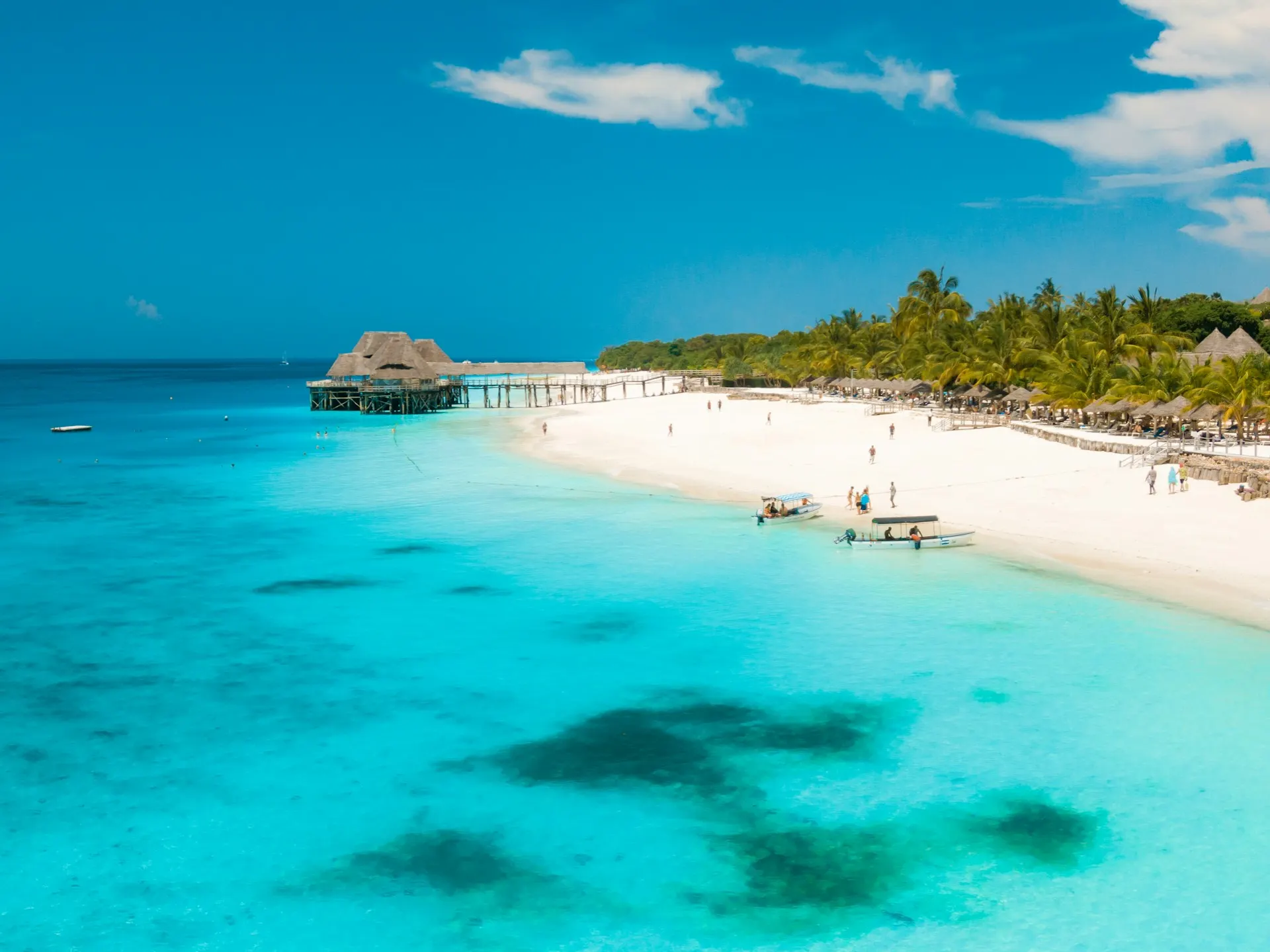
White sand. Warm Indian Ocean. Stone Town, a UNESCO World Heritage Site. 35km off the Tanzania coast.

End Your Safari Here. Or Start It.

Zanzibar is an archipelago of islands in the Indian Ocean, about 35 kilometers off the Tanzania coast. The main island is Unguja, commonly referred to as Zanzibar Island. Pemba Island sits 80 kilometers to the north and is far less visited. Both are semi-autonomous regions of Tanzania. Stone Town, the historic capital on Unguja’s west coast, is a UNESCO World Heritage Site.

The island has been shaped by centuries of Arab, Indian, Persian, and Swahili influence. Stone Town’s narrow alleys, carved wooden doors, and spice markets tell that history more clearly than any museum can. The slave trade passed through here. So did the spice trade. You can walk through both histories in an afternoon.

The beaches are the main reason most safari travelers add Zanzibar to their itinerary. The north coast around Nungwi and Kendwa has calm water year-round and stays swimmable even during the southeast trade winds that affect the east coast from June through September. The east coast beaches at Paje and Jambiani are quieter and better for kitesurfing when the wind is up. The south and west coasts are more sheltered and less developed.

Snorkeling and diving are excellent. The coral reefs around Mnemba Island, just off the northeast coast, are among the best in East Africa. Green turtles nest on several beaches and can be seen year-round.

Honest note: Zanzibar is well developed as a tourist destination. The beaches around Nungwi can feel busy in peak season. If you want quieter, we point you toward the south coast or toward Pemba, which sees a small fraction of Unguja’s visitors and has some of the best diving in the Indian Ocean.

Zanzibar at a glance

Size 2,461 km²
Best time Year-round
Departure Dar es Salaam

Safari Experiences in Zanzibar

Not every park offers every experience. Here is what is genuinely available in Zanzibar, and where.

Wildlife Zanzibar Is Specifically Known For

Spinner Dolphin

Spinner Dolphin

Green Sea Turtle

Green Sea Turtle

Humpback Whale

Humpback Whale

Red Colobus Monkey

Red Colobus Monkey

Hawksbill Sea Turtle

Hawksbill Sea Turtle

Best Time to Visit Zanzibar

Year-round
June – October

Dry Season

June through October brings the southeast trade winds (Kusi). The east coast gets rough and swimming becomes difficult. The north coast stays calm. This is peak safari season on the mainland, so Zanzibar pairs well with a northern or southern circuit in this period. Temperatures are cooler and skies are clear.

November – May

Green Season

November through May is generally warmer and more humid. The long rains fall from March through May. Short rains in November are lighter and usually come in short afternoon bursts. December through February is high season on the island with calm seas across all coasts. Coral visibility for diving and snorkeling is best from October through March.

Peak season
Good — fewer visitors

Getting to Zanzibar

How to reach Zanzibar from the main arrival points in Tanzania.

Dar es Salaam
Domestic flight 20 minutes

Most common route. About 20 minutes from Julius Nyerere Airport to Zanzibar Abeid Amani Karume Airport (ZNZ). Multiple daily flights with Air Tanzania, Coastal Aviation, and Precision Air.

Dar es Salaam
Ferry 2 hours

Fast ferry from Dar es Salaam port takes about 2 hours to Stone Town. Several daily departures. A good option if you want to arrive in Stone Town directly and see the harbor approach.

Zanzibar archipelago sits 35km off the Tanzania coast in the Indian Ocean.

Plan your Zanzibar safari

I’d like a  safari through Zanzibar in .

We reply within 24 hours — no deposit needed to get a quote